
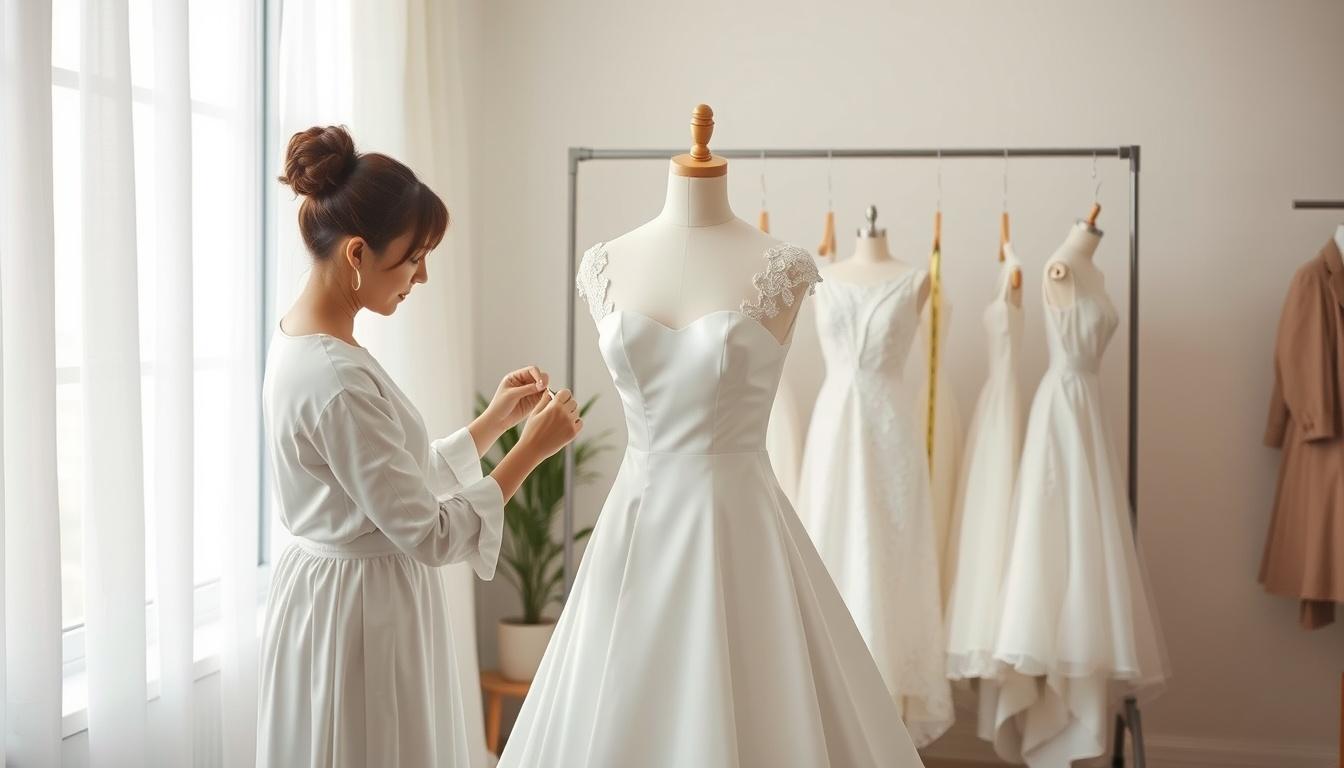
How Bridal Alterations Are Planned
Bridal and occasionwear alterations begin with an assessment of the garment, the fabric, and the requested fit. During the first fitting, the tailor reviews the construction, notes what can be adjusted, and discusses the likely sequence of work before any quote is confirmed.
Common adjustments include hem and train work, bodice and strap refitting, and bustle or fastening changes. Each project is planned around the garment's seam allowances, structure, and fitting limitations so the final result is based on what the dress can support.
Fittings are mapped to your event date, garment structure, and the changes needed.
A clear alteration plan helps each fitting stay focused and realistic.
For occasionwear, the fitting schedule is usually kept to one or two appointments, with enough time reserved before the event for a careful final check. Written alteration scope and approval before additional work help keep the process clear from start to finish.
At collection, the garment is checked again to confirm the agreed changes and to handle any small final adjustment if needed. Care and pressing notes can also be provided so the finished piece is ready for wearing and storage.